
Home » Applications » DEMOLITION PROJECTS
Access that comes down with the
Structure.
A guarded, debris-ready platform built for progressive work, cutting tools, vibration, dust, and changing structure levels.
Full-circumference access that
descends.
Access planned around the chimney to support stage-wise dismantling from the active work level.
Floor-by-floor access for high-rise
demolition.
Guarded working levels for progressive cutting, breaking, inspection, and material handling.
Access over elevated tank profiles and
overhangs.
Platform positioning planned for changing tank geometry and controlled dismantling zones.
Progressive access for cooling tower
decommissioning.
Access support for large curved structures where working levels and geometry change through the job.
Industrial Chimneys
Concrete Buildings
Water Tower
Cooling Tower
What Changes when MCWP is on Site
THE CHALLENGE
MCWP RESPONSE
SITE BENEFITS
Descending Structure
Access must come down as the chimney, tower, or building is dismantled.
Progressive Descent Platform
The working platform lowers stage by stage with demolition progress.
Stage-Wise
Descent
Debris & Cutting Loads
Concrete, rebar, dust, and tools create a demanding work environment.
Heavy-Duty Guarded Platform
Platform can be planned with overhead and side protection.
Guarded
Workface
Vibration & Dust
Cutting tools, breakers, and demolition activity affect temporary access stability.
Rack-and-Pinion Movement
Mechanical vertical drive gives controlled movement through changing levels.
Controlled
Vertical Travel
Changing Geometry
The structure profile changes as demolition progresses.
Adapted Working Level
Access position changes with the structure instead of staying fixed.
Continuous
Access
Demolition Access Work scope
Industrial Chimneys
Water Towers
Cooling Towers
Concrete Structures
Case Study
Chimney Demolition Access
For tall circular chimneys, the access system must move with the demolition sequence. A wrap-around MCWP platform supports cutting, inspection, debris control and stage-wise dismantling without depending on full-height scaffolding.
- Height Up to 90m
- StructureIndustrial chimney / circular shaft
- Challenge Changing height, tapering geometry and debris containment
- Access ApproachWrap-around platform lowered stage by stage
- OutcomeContinuous working access during progressive dismantling
Progressive Descent
360° Circumference Access
90m Starting Height
Why Demolition Contractors Specify MCWP Access
Progressive-Descent Discipline
Platform lowering, tie removal, and demolition sequence planned together not improvised on site.
Debris-Ready Platform
Overhead and side protection planned with the platform — not added later.
Vibration-Stable Drive
Rack-and-pinion movement holds steady through cutting, breaking, and percussive demolition.
Structure Behaviour Experience
Crews understand how chimneys, towers, and concrete structures behave during dismantling.
Plan access before mobilisation. Descent sequence matters.
Why Contractors Choose MCWP
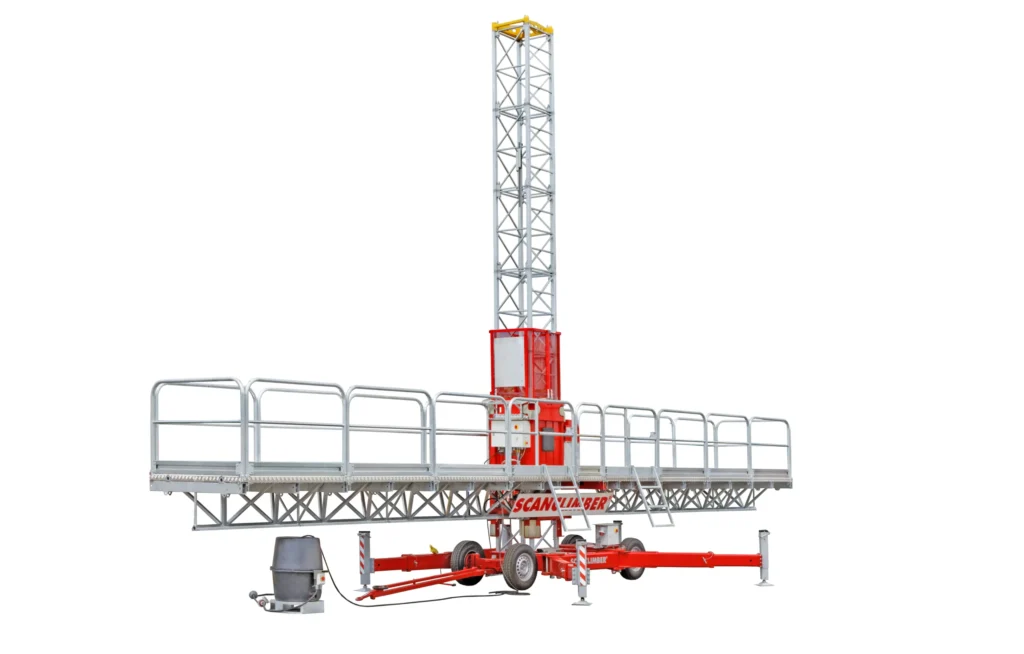
Unlike fixed access systems, MCWP follows the structure throughout the demolition process, providing continuous access for cutting, dismantling, inspection, and debris management activities.
- Continuous access throughout the demolition cycle
- Reduced downtime compared to conventional scaffolding
- Stable platform for cutting, dismantling, and inspection work
FAQ
Why are demolition contractors using MCWP for chimney, tower, and tall-structure dismantling?
MCWP gives a stable working platform that can descend as the structure is dismantled — helping workers, tools, and cutting equipment stay close to the active demolition level.
Explore the MCWP system
Can workers access all sides of a chimney or tower from the platform?
Yes. Twin-mast or wrap-around configurations can provide working access around the structure at the active level, helping cutting, breaking, and material handling happen from one controlled platform zone.
Can MCWP be used on a weakened or partially deteriorated structure?
Yes, subject to structure review. Anchor type, spacing, and quantity are planned based on the actual shell condition, with mechanical or chemical anchoring considered where required.
What should I share to get a useful demolition access proposal?
Share the structure type, height, current condition, demolition method, debris-control needs, and working window. If the structure is unusual or its condition is uncertain, send what you have — we can review the access approach.